Architecture
HydraCache is built as a set of explicit cache boundaries rather than one invisible cache layer.
The local runtime owns typed serialization, TTL, tags, single-flight loading, diagnostics, and event streams. Database adapters build query-result descriptors on top of that runtime. Distributed invalidation and cluster APIs carry invalidation intent and membership metadata without hiding the local cache.
Runtime Flow
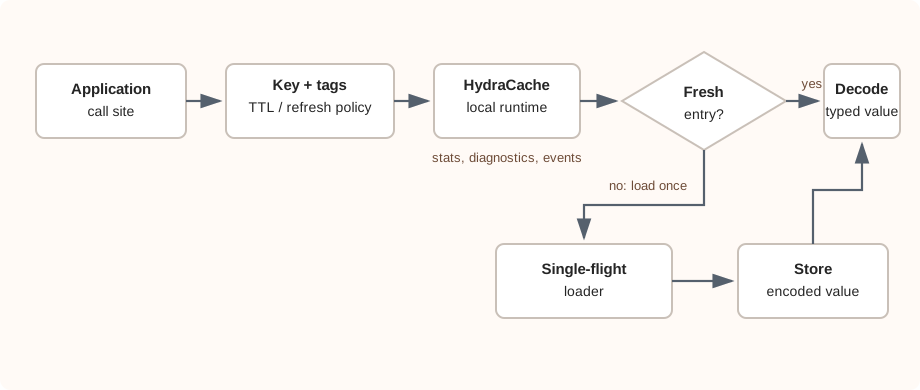
On a hit, the runtime decodes and returns the cached value. On a miss, get_or_load runs a loader and stores the result under the chosen key and tags. Concurrent same-key misses share one in-flight loader.
Query Flow
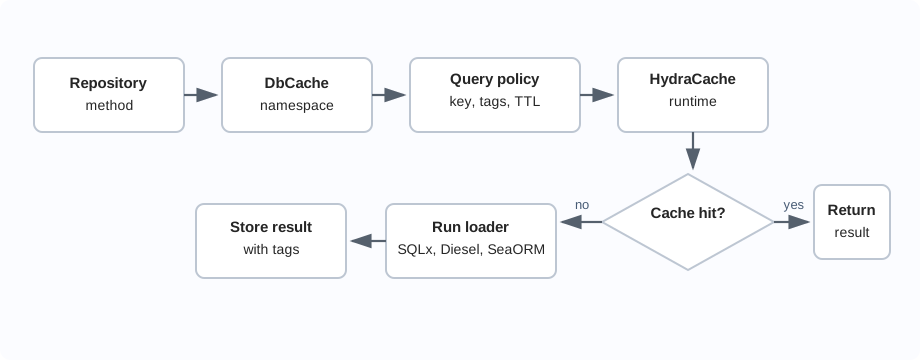
HydraCache does not parse SQL or infer table dependencies. The application names the result and the writes that can invalidate it.
Invalidation Flow
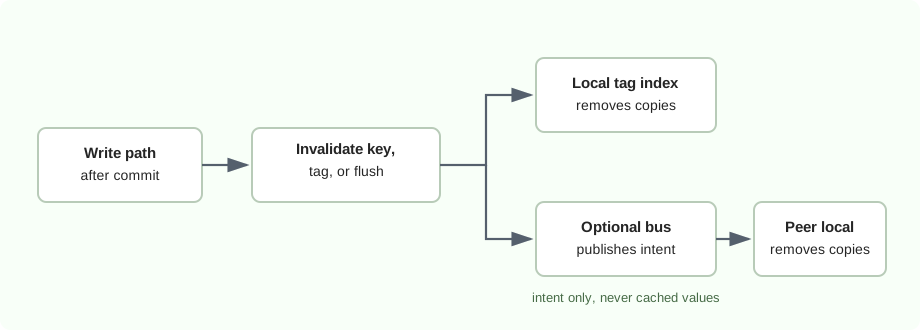
The bus propagates intent, not values. This keeps distributed behavior local-first: each process remains responsible for its own cache contents and loader code.
Cluster Flow
Client/member cluster mode adds role, node id, generation, membership, ownership, and peer-fetch vocabulary. It does not turn HydraCache into a production data grid by itself.
Use cluster APIs when the application needs stable membership diagnostics or a future route toward owner-based peer reads. Keep local cache semantics visible even when multiple processes participate.